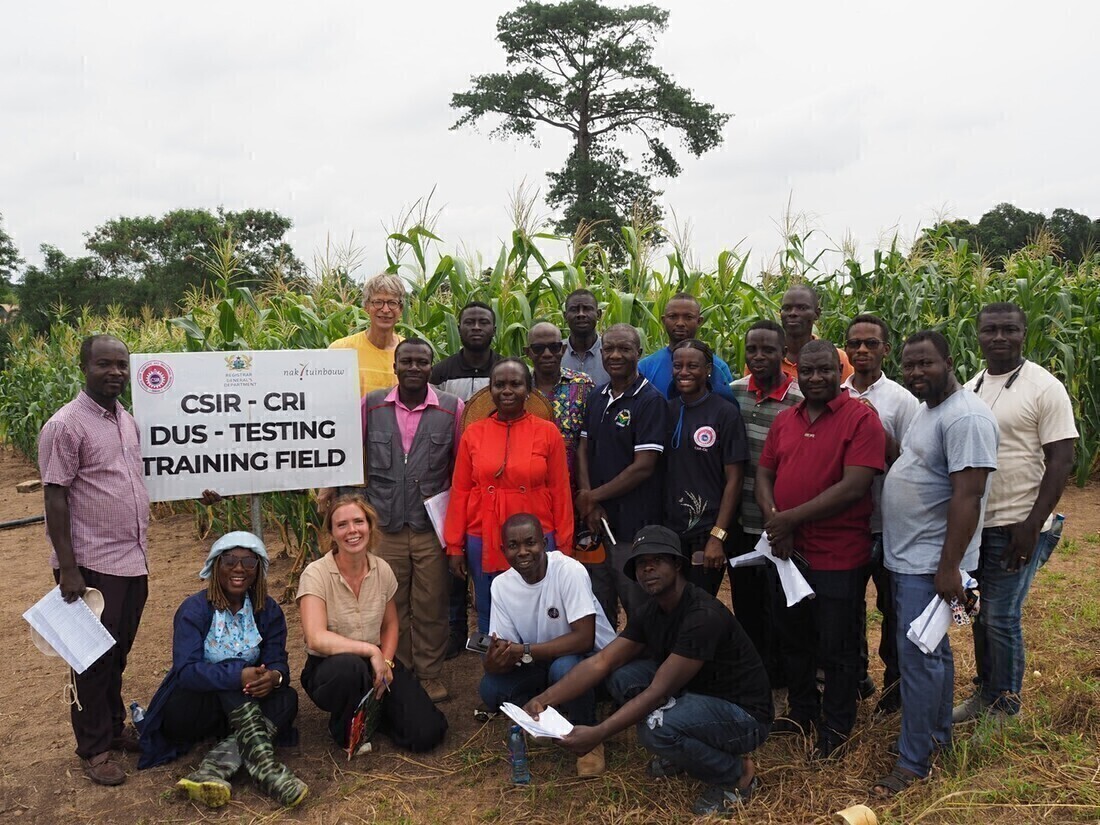
Breeders develop new varieties. We test those varieties for national registration or Plant Breeders' Rights.
Variety testing optimizes processes
We work year-round to improve our services. Read more about the processes we've improved at Identity & Variety Testing in the featured article "We're constantly improving our work."
New resistance tests building opens
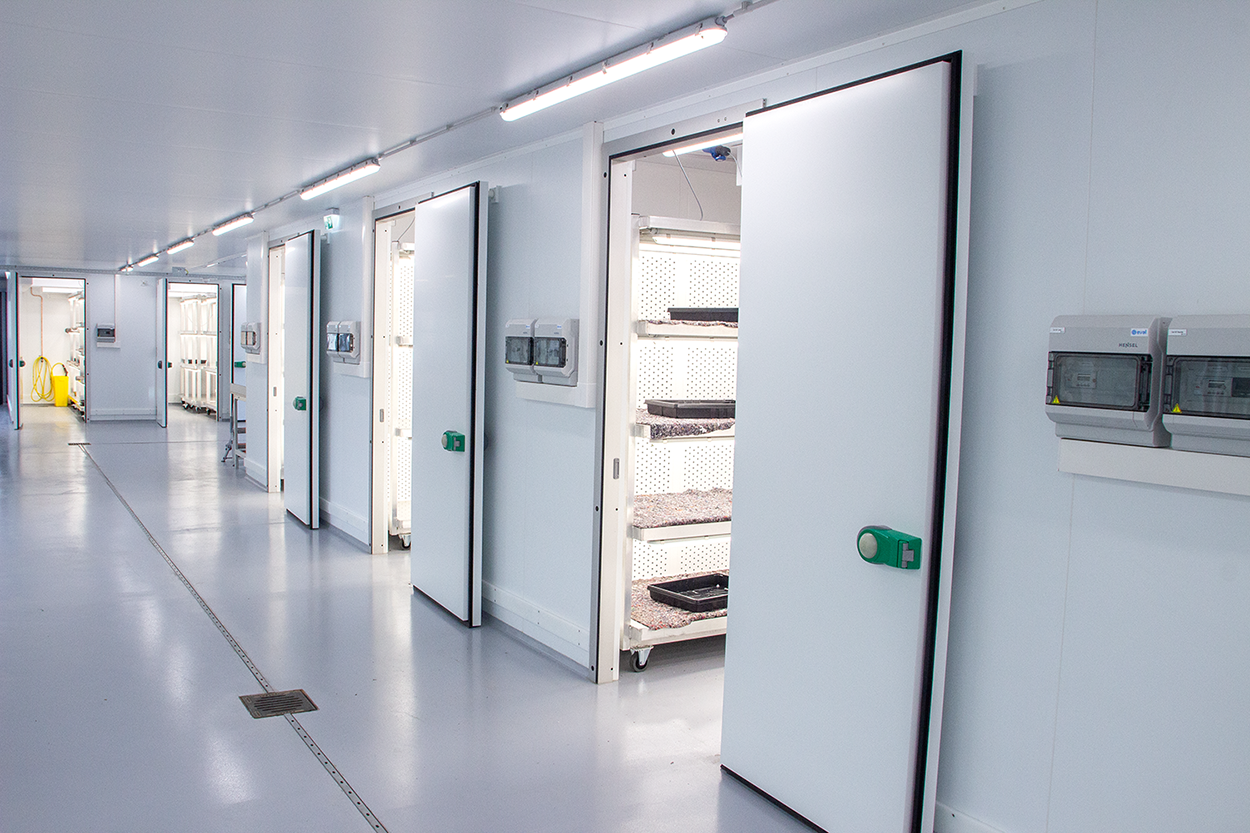
To improve resistance tests, we built seven new research rooms with an adjacent workspace. These provide space for conducting multiple resistance tests simultaneously and developing new tests. We officially opened the new facilities in September. With this expansion, we expect to eliminate the backlog in resistance tests that accumulated in 2025 by 2026.
Methodology research
DUS testing focuses on registration and Plant Breeders' Rights. We also conduct value for cultivation and use (VCU) research for agricultural crops. To improve the quality and efficiency of DUS tests, Naktuinbouw conducts methodology research. The Board for Plant Varieties funds part of this research.
In 2025, we worked on, among other things:
- Protocol verification and future protocol revision for seed shallot varieties
- International harmonization and validation of the SNP set for lettuce
- Selecting comparable varieties using image analysis and AI
- Identification and implementation of DNA markers for morphological traits in tomatoes
- Exchange of variety data with the EU Plant Variety Portal
- Harmonization of a resistance test for Peronospora Viciae in peas
- Verification research on DNA combined with morphology in tomatoes and onions
- Marker development for fusarium resistance (FOC1) in cabbage varieties
- FlorFasForward; Marker development for resistance genes Fom1, Fom2 and MNSV in melon (model 1).
Regulatory contacts
On behalf of the Board for Plant Varieties, Naktuinbouw represents the Netherlands at meetings of the CPVO and UPOV:
- CPVO: In September, we participated online in the annual CPVO meeting of the Permanent Working Group on Variety Denominations Guidelines. In November, we attended the Vegetable Expert Meeting. The CPVO also visited Naktuinbouw in November to meet the new IT Director, Nicola Fabiani. In December, we participated in the annual CPVO Examination Offices Meeting in Paris.
- UPOV: In the spring, we organized the Technical Working Group for Ornamental Plants (TWO) in the Netherlands. More than 110 participants from thirty different countries attended: 31 participants attended the meeting at Naktuinbouw in Roelofarendsveen, the rest joined online. In May, we participated in the Technical Working Group for Vegetables (TWV) and Agricultural Plants (TWA). In October, we participated in the Technical Committee in Geneva, France. Variety researcher Cécile Marchenay was appointed chair of the TWVs in 2026.
We worked more closely with the CPVO in 2025. The CPVO launched three new working groups, in which Naktuinbouw also participates:
- Terms of reference of the working group on DUS matters related to cost-effectiveness
- Terms of reference of the working group on the potential involvement of breeders in DUS testing
- Terms of reference of the working group on the revision of the QAS (Quality Audit System) system
In addition, the Ministry of Agriculture, Fisheries, Food Security and Nature utilizes our expertise in developing and implementing new laws and regulations, such as the new EU regulation for Plant Reproductive Material (PRM) for all propagating material of food crops.
Platform for accelerating resistance breeding in ornamental horticulture
Naktuinbouw is one of the founders of the platform for accelerating resistance breeding in ornamental horticulture. Within this platform, various participants are joining forces to accelerate the development of disease- and pest-resistant varieties. In 2025, they organized three meetings and worked on developing project plans. Other stakeholders include breeding companies, Vertify, Plantum, InHolland University of Applied Sciences, and Greenport Aalsmeer.
PVP Toolbox
We share our knowledge about Plant Variety Protection systems worldwide. With the PVP Toolbox, we develop projects to raise awareness of the importance of and knowledge about Plant Breeders' Rights. Demand for the Toolbox projects comes primarily from agricultural councils. The Ministry of Agriculture, Fisheries, Food Security and Nature funds the PVP Toolbox. In 2025, we worked on Toolbox projects with the following countries: Argentina, Armenia, Nigeria, Ghana, Egypt, Guatemala, Peru, Taiwan, and Vietnam. Through the PVP Toolbox, we organized various activities for these countries, such as a visit to Naktuinbouw, training at Naktuinbouw or abroad, participation in the training ‘Plant Breeders' Rights for Food Security and Economic Development’, and/or other knowledge transfer sessions.
The current PVP Toolbox period expires at the end of 2026. Therefore, Naktuinbouw submitted a request to the Ministry of Agriculture, Fisheries, Food Security and Nature to extend the PVP Toolbox for another ten years. An evaluation of the PVP Toolbox for the years 2022 through 2025 supported the request. For the evaluation, two independent evaluators conducted a comprehensive survey. They also prepared an assessment report. The outcome of the evaluation was very positive. We expect the Ministry's response to the extension request in the second quarter of 2026.
Argentina
In May, Argentine experts visited the Netherlands for a study trip on plant variety protection and cooperation in the seed sector. The main objective was to promote UPOV membership, improve regulatory alignment, and strengthen the relationship between the two countries.
Armenia
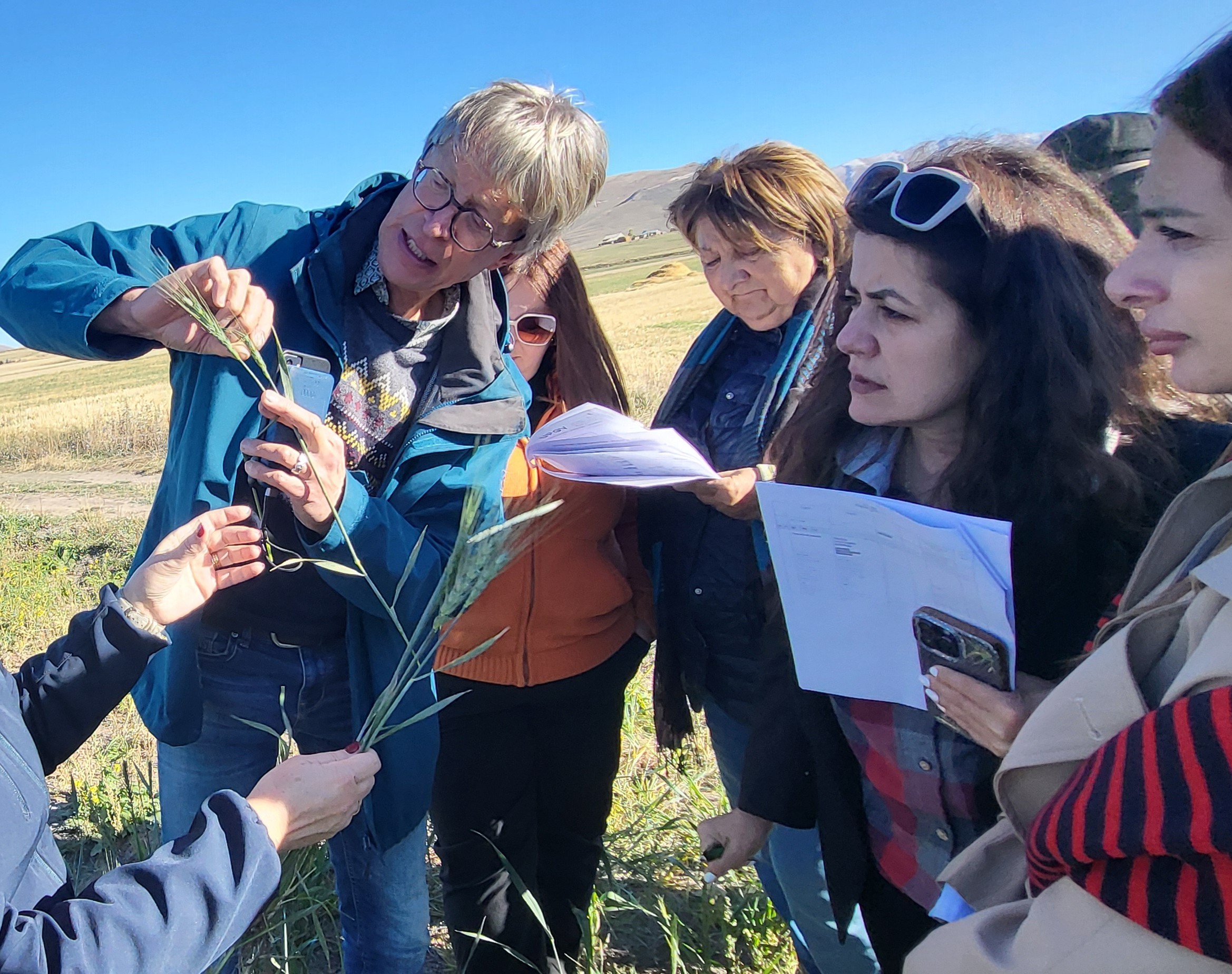
In October, Naktuinbouw organized a DUS training course for wheat and chickpeas in Armenia, as well as an interactive session on plant variety rights. The main objective was to strengthen Armenia's crop-specific DUS capacity following its accession to UPOV in 2024. Furthermore, it was intended to deepen the understanding of plant variety rights, including farmers' rights and their enforcement, among interested parties.
Egypt
In November, Naktuinbouw provided a DUS training for strawberries in Egypt. The training aimed to strengthen DUS research in strawberries, including the use of the UPOV strawberry guidelines, identifying comparable varieties, and discussing DNA support.
Ghana
In November, Naktuinbouw provided an in-depth DUS training in Ghana for tomatoes, rice, maize, the legume cowpea, and the tropical tuber yam. The training aimed to enhance technical skills for DUS research and standardize trial preparation and documentation. This training was a follow-up to the one in 2024.
Guatemala
Together with TAEIX and CPVO, we prepared a launch mission. This mission focused on strengthening the Guatemalan plant variety protection system and supporting UPOV membership. Due to bureaucratic delays within the EU, the mission has been postponed until early 2026.
Kazakhstan
Kazakhstan aims to become a member of UPOV. To this end, Naktuinbouw, together with the Kazakh PVP office, developed a three-year roadmap outlining activities for after joining the UPOV system. The goal was to establish strategic priorities for implementing the UPOV standards and to plan capacity building for DUS testing and application processing. Due to internal developments and the parliamentary debate on the revised PVP law, the completion of the roadmap and the accompanying training were postponed. The project concluded in 2025 and will resume as soon as possible.
Nigeria (in conjunction with Ghana)
In September, Naktuinbouw organized a training for participants from both Ghana and Nigeria. The main objective of the training was to strengthen institutional capacity for DUS testing for the registration of plant varieties and plant variety rights. Both countries are continuing to develop their national PVP systems.
Peru
Commissioned by Naktuinbouw, UPOV produced an educational video demonstrating how Plant Variety Protection (PVP) underpin Peru's globally successful blueberry industry. The goal was to raise awareness of the economic, ecological, and social benefits of improved varieties and robust PVP systems. An initial version was completed in December, with a planned multilingual rollout (English, French). Efficient budget allocation allowed for the production of a similar video on grapes for the Dominican Republic, broadening its reach and impact. The final versions of both videos are expected in early 2026.
Taiwan
Naktuinbouw and TSIPS (Taiwan Seed Improvement and Propagation Station) developed an exchange framework for DUS reports on Oncidium and Chrysanthemum. The goal was to assess the technical requirements, ensure compliance with the CPVO, and agree on the scope of the exchange. After audits and consultations, a bilateral exchange for Oncidium and a unilateral acquisition (Naktuinbouw → Taiwan) for Chrysanthemum were agreed upon. A delegation from TSIPS visited Naktuinbouw in September, shared the Oncidium guidelines, and invited us to participate in the PVP symposium at the end of February 2026. The next steps include the legal completion of the agreement and the participation of experts in the symposium.
Vietnam
In December, a Dutch delegation (Ministry and trade association Plantum) met with Vietnamese authorities and the industry in Vietnam to strengthen awareness, enforcement, and DUS testing for vegetable oils and plants. The goal was to promote collaboration in the seed sector, improve enforcement, and stimulate innovation and royalty compliance. The result is an agreement to develop a joint project in 2026, focusing on awareness, enforcement, and DUS capacity, plus improved communication strategies for farmers and seed companies. The project is funded by the Netherlands Enterprise Agency.
Other international activities
We participate in various international projects relating to Plant Breeders’ Rights.
China
In June, Naktuinbouw organized a training program in China. The training combined DUS research in the field with molecular detection techniques in the laboratory. The goal was to establish a molecular library for potatoes and develop a standard for molecular detection.
Nigeria
From 2020 to 2025, Naktuinbouw led a project on plant variety protection within the multi-year CSP project in Nigeria. During this time, the country became a member of UPOV, established a fully operational PVP office at the NASC (the Nigerian Council for Agricultural Seeds), and launched a digital application portal linked to the release of varieties.
Suriname
In the second quarter, Naktuinbouw and the Surinamese Ministry of Agriculture, Livestock and Fisheries carried out the Makandra project to strengthen the national seed system. Technical expertise and collaboration were strengthened. Clear next steps were also defined for legislation, the development of gene banks, and the expansion of DUS capacity. The project laid the foundation for a modern, resilient seed sector that aligns with international standards and climate adaptation goals.
South Africa
In September, Naktuinbouw provided a training course for Plantovita (a research laboratory in the potato sector) and the Potato Certification Service in South Africa. The training aimed to give participants a better understanding of the characteristics of light germination testing according to UPOV guidelines, improve their practical skills in variety identification and uniformity assessment, and introduce the European potato DNA database as a supplementary tool.
EAPVP Forum 2025
Naktuinbouw participated in the eighteenth East Asia Plant Variety Protection (EAPVP) Forum in Singapore. The forum is a platform for knowledge exchange, networking with international experts, and collaboration to strengthen plant variety rights systems in Asia. This is an important regional meeting, where Naktuinbouw represented the group to strengthen the network and explore and initiate potential collaborations in the region.