
Naktuinbouw is a service organization. We assess and inspect, we test and analyze, and we share our knowledge. Every year, new insights emerge, new tools are introduced, and new employees with a fresh perspective join us. To keep pace with the organization, our clients, and the world around us, we continuously work to improve our services.
Below are some examples of our variety testing, inspections, and laboratory work.
More efficient variety testing
In 2025, we developed a vision to conduct our variety testing more efficiently in the future. In this context, we have already launched several projects:
- We are shortening the DUS test in several bean and tomato crop types.
- For identity verification for inspections (maintenance inspection and follow-up inspection), we carried out projects to achieve an efficient working method. One of these is that in 2026 we will start using DNA testing in tomatoes to determine varietal purity. We are also conducting field research to determine uniformity. This means the results are available to companies more quickly, and only one sample needs to be planted instead of two.
- Artificial intelligence (AI) helps us select comparators (comparative varieties from common knowledge) more efficiently based on images. We developed a step-by-step plan to utilize modern tools in more areas.
- To continue conducting high-quality trials in open ground and greenhouses in the coming years, we developed a soil vision. This forms the basis for modernizing our facilities.
- New inspection program for company inspections
- After ten years, we switched to a new (software) inspection program for our company inspections in March. This program improves process analyses, reduces costs, and supports inspectors
- with digital tools, such as interactive inspection maps.
Optimizing import and export inspections
We optimized several work processes for import and export inspections. This led to a reduction in waste and, consequently, saved time for both the client and Naktuinbouw. For example, we improved the visual process for batch inspections of export seeds, the import process for derogation material, various processes related to planning, and the processing of document records.
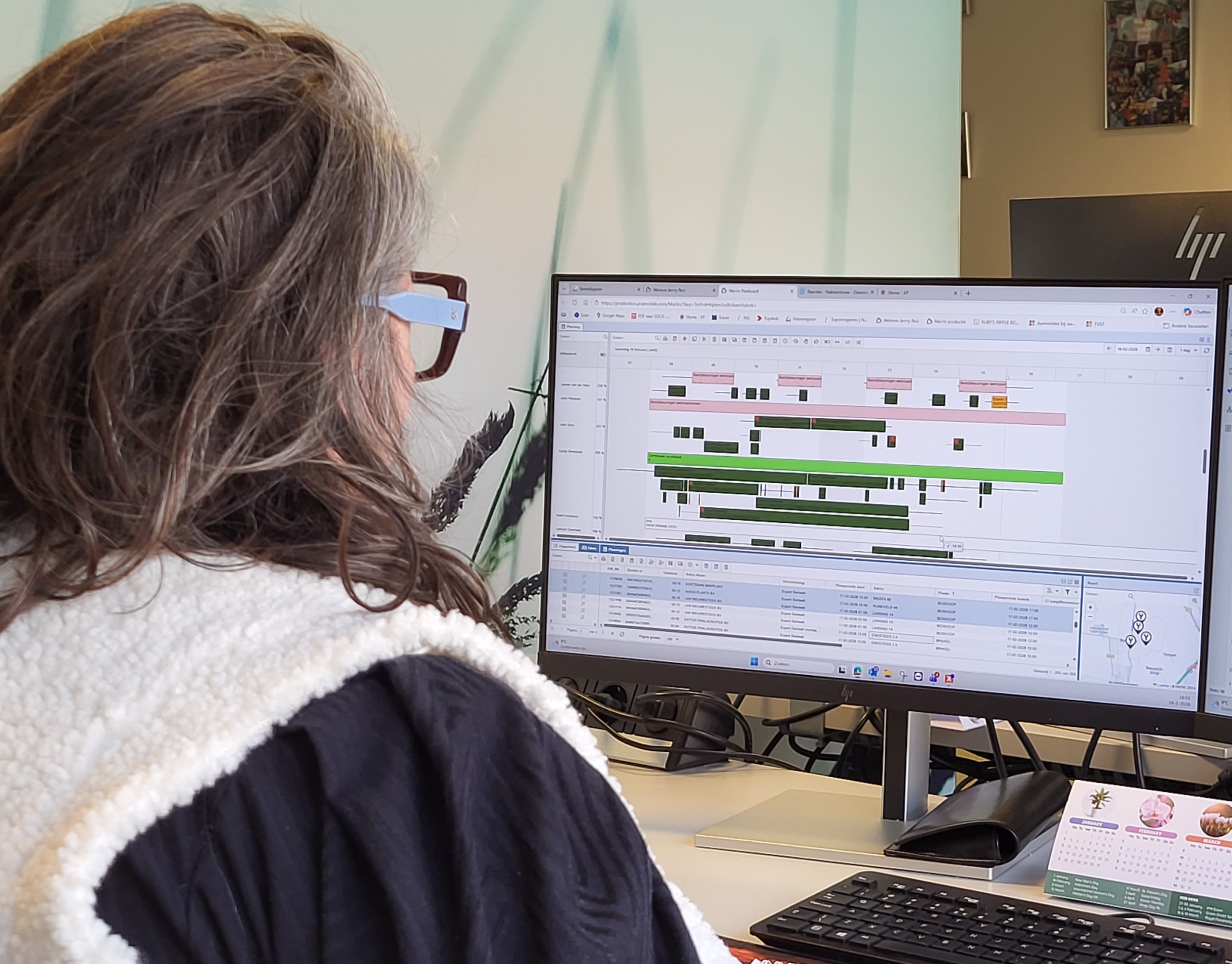
Import and export inspection planning tool
In the spring of 2025, we began automatically scheduling all inspection activities using a new planning system. This system links import and export inspections to inspectors based on historical data and expected travel times. The planners only process exceptions and emergencies and monitor the planning. In the initial phase, we still made many manual adjustments. Minor adjustments improved the planning system. The biggest challenge lies in the timing of inspection requests. We continue to focus on improving the planning process. The new planning method has already made the scheduling process demonstrably more efficient. We can perform the same work with fewer people, both in planning and inspections.
More efficient nematode testing on onions
Every year, from August to November, we receive large numbers of onion samples for nematode testing. This peak demand caused disruptions to regular laboratory processes, particularly during sample preparation. The previous method, in which samples were processed ad hoc, led to high workloads, delays in other processes, and confusion for clients. Through intensive collaboration between the Nematology, Administration, and Sample Preparation teams, firm agreements have been made regarding scheduling, communication, and maximum numbers of onions per day. By organizing these deployment times more tightly, the process has become more calm and transparent. This allowed other parallel work to continue uninterrupted. The teams involved are proud of this mutual collaboration and the fact that several teams have jointly arrived at a sustainable solution.
Starting the daay together improves processes
Since September, the Nematology, Mycology, and Bacteriology teams start each day with a short meeting. During these day-to-day meetings, there will be more focus on, among other things:
- Coordinating activities and priorities
- Early identification of bottlenecks
- Improving internal communication
- Team ownership
- Shortening the lines to the production process.
These teams will continue this approach in 2026. They will further modernize and standardize this way of working. The intention is to roll out this method more broadly within the Health, Testing & Analysis domain.