
-
Variety Testing
-
Data of varieties
- Authorisation: marketing material of not yet listed varieties
- Use of a third country synonym for a vegetable variety
- Vegetable-, agricultural- or ornamental crop?
- Internal Naktuinbouw list for vegetable varieties
- List of names of Woody Plants and List of names of Perennials
- OrganicXseeds: database
- Variety descriptions
- Identity (Variety Tracer)
-
Plant Breeders’ Rights and/or listing DUS-VCU
- Breeder's co-trials vegetable crops
- External Crop Experts Ornamental Crops
- Conditions of submitting identity material for DUS testing
- Calibration books Variety Testing
- National protocols Variety Testing
- American Plant Breeders' Rights - technical testing
- Two tests in one year
- Procedure of landraces, hobby market and conservation varieties
- Varietal trueness and varietal purity
- Resistance
-
Data of varieties
- Inspections
- Laboratories
- Knowledge & Education
- About us
-
Variety Testing
-
Data of varieties
- Authorisation: marketing material of not yet listed varieties
- Use of a third country synonym for a vegetable variety
- Vegetable-, agricultural- or ornamental crop?
- Internal Naktuinbouw list for vegetable varieties
- List of names of Woody Plants and List of names of Perennials
- OrganicXseeds: database
- Variety descriptions
- Identity (Variety Tracer)
-
Plant Breeders’ Rights and/or listing DUS-VCU
- Breeder's co-trials vegetable crops
- External Crop Experts Ornamental Crops
- Conditions of submitting identity material for DUS testing
- Calibration books Variety Testing
- National protocols Variety Testing
- American Plant Breeders' Rights - technical testing
- Two tests in one year
- Procedure of landraces, hobby market and conservation varieties
- Varietal trueness and varietal purity
- Resistance
-
Data of varieties
- Inspections
- Laboratories
- Knowledge & Education
- About us
International Ralstonia experts gather for the 8th International Bacterial Wilt Symposium
Publicationdate: 4 maart 2026
From 22 to 26 March, the 8th International Bacterial Wilt Symposium (8th IBWS2026) will take place in Wageningen. This symposium is the most important global event on bacterial wilt caused by Ralstonia species. The symposium is organised by Wageningen University & Research (WUR), NIVIP NVWA, NAK and Naktuinbouw.
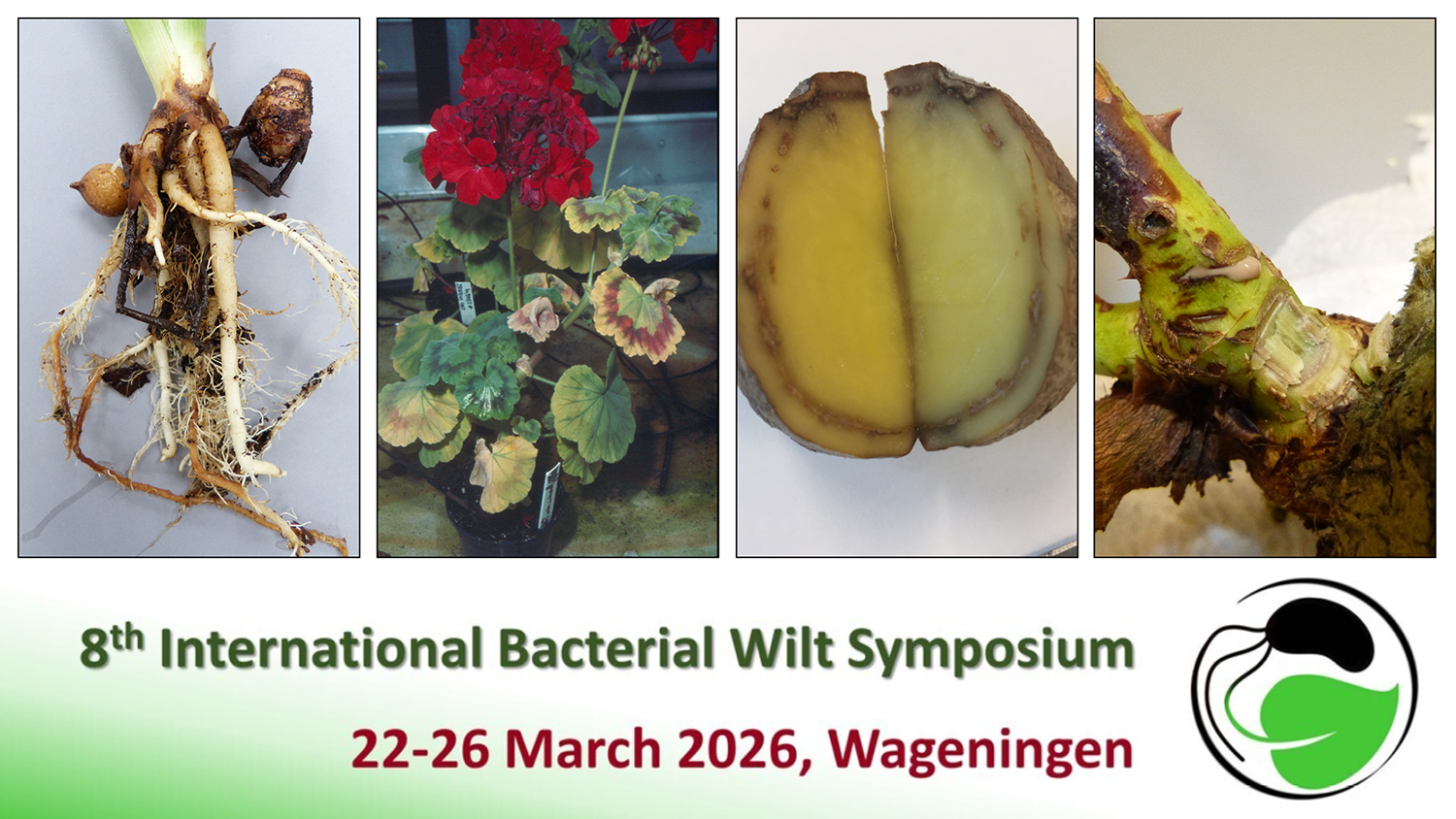
During this week, the organisations will share their knowledge, experience and international networks to provide up-to-date insights into this disease.
Global impact
Ralstonia is one of the most harmful bacterial plant diseases worldwide. The bacterium affects a wide range of crops and causes, among other things, wilting and brown rot in potato, tomato, rose and various ornamental crops. Within Europe, Ralstonia bacteria have quarantine status.
Attention remains necessary in the Netherlands as well. Between 2015 and 2017, an outbreak in roses caused significant damage. In recent years (2021–2024), a new, highly virulent variant of the bacterium has also been found in Dutch surface water.
These recent findings highlight the importance of continued knowledge sharing. This helps us better understand how the bacterium spreads, develop reliable tests, and improve risk assessments. It also supports taking appropriate measures when the bacterium is detected somewhere.
Collaboration enables hosting in the Netherlands
The organisation of the symposium is the result of close cooperation between WUR, NVWA‑NIVIP, NAK and Naktuinbouw. The partners complement each other with expertise in phytosanitary inspections and supervision, research on detection and spread, certification and quality assurance of propagating material and sharing knowledge with the chain and the sector.
Importance for the sector and society
The 8th IBWS2026 brings together researchers, inspection services, growers and policymakers. During the conference, topics of direct practical relevance will be addressed, such as:
- how Ralstonia spreads
- new methods to detect the bacterium
- research into resistance and variety development
- effective, practical measures to prevent or control contamination.
Because a large international research community gathers in Wageningen, this creates a unique opportunity to pool knowledge and strengthen joint strategies.
Registration & practical information
Registration is open until 15 March via the conference website. There you will also find more information about this symposium.
Naktuinbouw only uses functional and analytical cookies. More information